



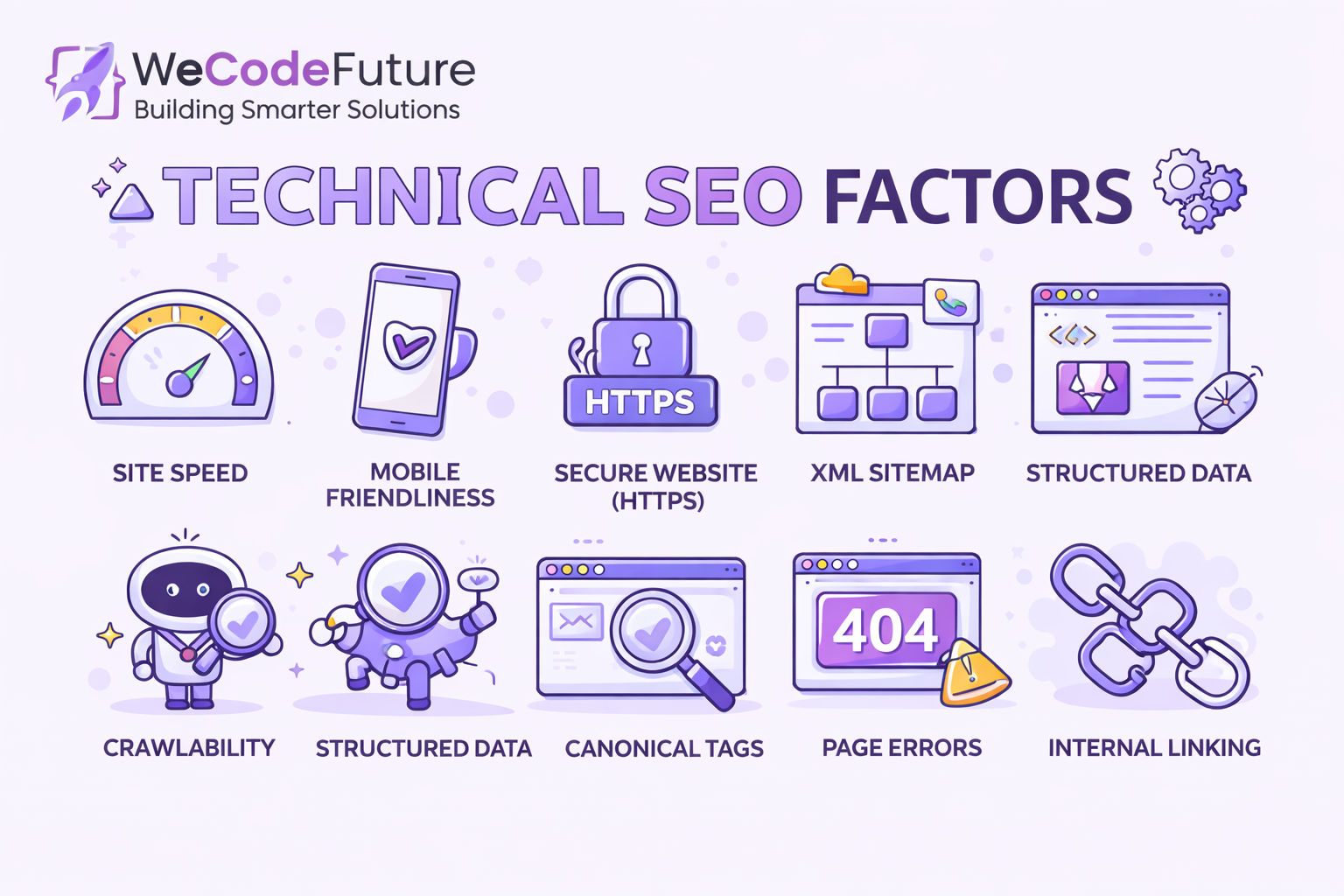
11 Technical SEO Factors That Matter Most
When it comes to order on search engines, most people focus strongly on content and backlinks but ignore the foundation that supports both Technical SEO Factors. Without strong technical SEO, even the well-written content may struggle to rank.
Technical SEO makes sure that your website is simple to crawl, fast to load, user-friendly, and properly methodized for search engines. In case you’re a learner or diving into advanced technical SEO, learning the right elements can greatly impact your website performance.
In this guide, we’ll learn the 11Technical SEO Factors that matter most, along with a useful technical SEO checklist, place into on page technical SEO, and how it connects to the benefits of SEO content writing.
What are technical SEO factors?
Website Speed Optimization
One of the most important Technical SEO Factors is website speed, which improves user experience and boosts SEO,and increase conversions expect pages to load quickly, ideally within 2–3 seconds. Slow websites not only irritate users but also increase bounce rates and negatively impact rankings.
Key Optimization Tips:
- Compress images
- Apply browser caching
- Minimize CSS, JavaScript, and HTML
- Use a Content Delivery Network (CDN)
Speed plays a key role in both user experience and SEO performance, making it a must-master factor
Mobile-Friendliness
With the main part of searches happening on mobile devices, mobile improvement is a core part of Technical SEO Factors.
Google uses mobile-first indexing, meaning it mainly checks the mobile version of your website.
Best Practices:
- Apply responsive design
- Ensure readable font sizes
- Avoid intrusive pop-ups
- Improve touch elements
A user-friendly website is key for both rankings and user engagement.
Crawlability and Indexability
Search engines must be able to crawl and index your website efficiently. If they can’t access your pages, they won’t appear in search results.
Important Elements:
- XML sitemap
- Robots.txt file
- Proper URL structure
- Internal linking
This is where a proper technical SEO checklist becomes essential to ensure nothing blocks search engines from accessing your content.
Secure Website (HTTPS)
Security is a ranking factor. Websites using HTTPS data security are favored over unsafe HTTP websites.
Why It Matters:
- Protects user data
- Builds trust
- Improves rankings
Moving to HTTPS is one of the simplest yet most impactful Technical SEO Factors.
Structured Data (Schema Markup)
Structured data helps search engines learn your content better and can enhance your search results with rich results.
Examples:
- Review ratings
- FAQs
- Product details
- Website tail
Implementing schema markup is part of advanced technical SEO and can greatly improve click-through rates.
URL Structure Optimization
Clean and descriptive URLs are easier for both users and search engines to understand.
Best Practices:
- Keep URLs short and meaningful
- Include primary keywords
- Avoid unnecessary parameters
- Use hyphens instead of underscores
Optimized URLs contribute to better indexing and improved user experience—key Technical SEO Factors.
Core Web Vitals
Core Web Vitals are performance metrics that measure user experience, including loading speed, interactivity, and visual stability.
Key Metrics:
- Largest Contentful Paint (LCP)
- First Input Delay (FID)
- Cumulative Layout Shift (CLS)
These data points are central to advanced technical SEO and directly affect rankings.
Duplicate Content Management
Duplicate content confuses search engines and can dilute your rankings.
How to Fix It:
- Use canonical tags
- Avoid duplicate pages
- Implement 301 redirects
- Optimize content uniqueness
Managing mirror content is one of the regularly missed Technical SEO Factors, still it plays a crucial role in maintaining ranking influence.
Technical SEO Checklist
Here’s a fast technical SEO checklist to make sure your website is fully improve
- Ensure fast loading speed
- Make your website touch-friendly
- Make and submit an XML sitemap
- Optimize robots.txt file
- Use HTTPS security
- Fix broken links and errors
- Implement structured data
- Optimize URL structure
- Improve Core Web Vitals
- Remove duplicate content
Following this checklist daily helps maintain strong technical health and improves search visibility.
On Page Technical SEO
When technical SEO often focuses on backend improvements, on page technical SEO mixes technical elements directly within your pages.
Key Components:
- Proper use of HTML tags (H1, H2, H3)
- Optimized meta titles and descriptions
- Image alt text
- Internal linking structure
- Keyword placement
On page technical SEO ensures that each page is not only readable for users but also understandable for search engines.
Advanced Technical SEO
For those looking to go beyond basics, advanced technical SEO involves deeper improve strategies:
Advanced Techniques:
- Log file analysis
- JavaScript SEO optimization
- Server-side rendering (SSR)
- Lazy loading optimization
- Advanced schema implementation
These techniques help large or complex websites gain a competitive edge in search rankings.
Benefits of SEO Content Writing
Strong technical SEO works hand-in-hand with quality content. Learning the benefits of SEO content writing helps you maximize your overall strategy.
Key Benefits:
- Improves organic traffic
- Enhances user engagement
- Supports keyword rankings
- Builds authority and trust
- Increases conversion rates
When mixing with optimized Technical SEO Factors, content becomes more discoverable and effective.
Technical Seo Factors Google
Technical SEO focuses on optimizing a website’s logic layer so search engines like Google can crawl and index it efficiently.
Key factors involve Core Web Vitals, which measure speed and user skills, and mobile-first responsiveness, ensuring the site works well on all devices.
HTTPS security protects user data and builds trust, while structured data (schema markup) helps search engines learn content better.
Additionally, strong crawlability through XML sitemaps and robots.txt makes sure of proper indexing.
These factors together improve rankings, enhance user expert, and support long-term website results and visibility in search results.
How Technical SEO and Content Work Together
Many people treat technical SEO and content as varied strategies but they are deeply interconnected.
- Technical SEO ensures your content is visible
- Content ensures your website is valuable
- Together, they drive rankings and traffic
Without proper Technical SEO Factors, even the best content may never reach your audience.
Common Technical SEO Mistakes to Avoid
Even skilled marketers make mistakes. Here are a few to look out for:
- Ignoring mobile optimization
- Blocking important pages in robots.txt
- Slow page speed
- Missing structured data
- Duplicate content issues
Avoiding these mistakes ensures your technical foundation remains strong.
Conclusion
Mastering Technical SEO Factors is key for anyone major about improving their website’s search performance. From speed improvement to method data, each factor plays a key role in how search engines perceive your site
By basing a solid technical SEO checklist, applying on-page technical SEO, and exploring advanced technical SEO strategies, you can build a power base for long-term success.
And when mixing with the benefits of SEO content writing, your website becomes a powerful tool for driving traffic, connections, and conversions