



How to Turn Keyword Gaps into SEO Priorities
Keyword gaps reports can look overwhelming at first, especially when they reveal hundreds of opportunities at once. The key is not to chase every missing term but to choose the ones that align with audience intent, business goals, and realistic ranking potential.
In my own SEO work, I focus on keywords that can attract qualified traffic and support conversions, because that approach creates better long-term results.
In place of treating every gap as a priority, I review competition, relevance, and expected impact before deciding where to invest time. This process helps turn raw keyword data into a clear content strategy that improves rankings, drives meaningful visits, and delivers measurable business growth.
What Is a Keyword Gap?
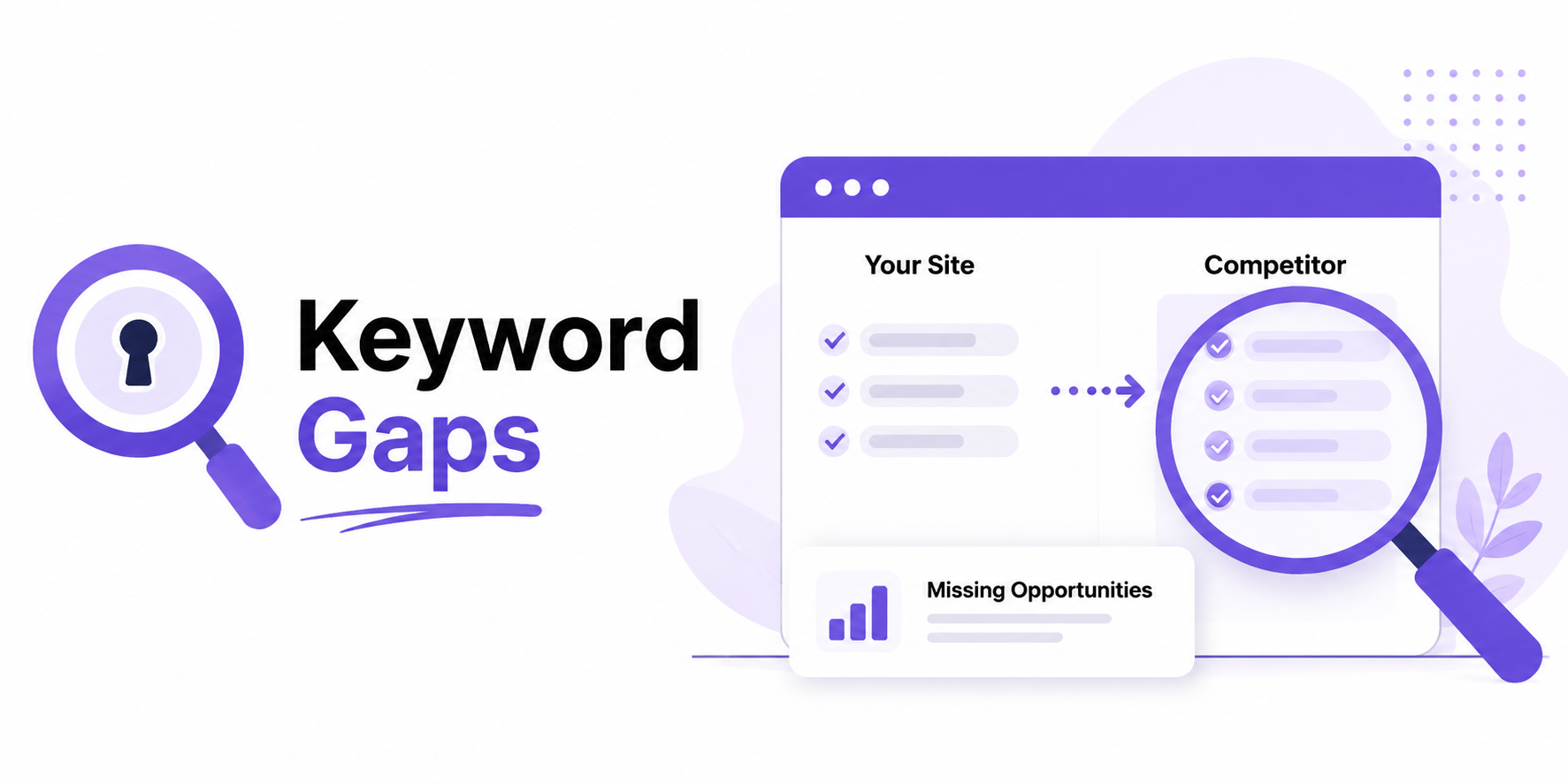
A keyword gap is the difference between the search terms your website ranks for and the terms your competitors rank for. While these gaps can uncover significant growth potential, the real challenge is deciding which keywords deserve your attention first based on relevance, search intent, competition, and business value.
Keyword Gap vs. Content Gap
Although they’re closely related, keyword gaps and content gaps aren’t exactly the same.
A keyword gap focuses on individual search queries where competitors outperform your website.
A content gap is broader. It identifies entire topics, categories, or customer questions your content doesn’t address.
Step 1: Identify Your Real SEO Competitors
Before analyzing keyword gaps, identify the right SEO competitors. Compare your website with both direct competitors and high-ranking SERP competitors to uncover realistic keyword opportunities and build a more effective SEO strategy.
Choose the Right Competitors
Focus on competitors with:
- Similar website authority
- Similar target audience
- Strong organic visibility
Step 2: Find Your Keyword Gaps
Once you’ve identified your competitors, the next step is performing a keyword gap analysis.
Several SEO tools make this process straightforward, including Ahrefs, Semrush, and Google Search Console.
These tools compare your website’s rankings against competitors and highlight valuable keyword opportunities you may be missing.
- Missing Keywords: Competitors rank, but you don’t.
- Weak Keywords: You rank poorly while competitors rank higher.
- Untapped Keywords: Some competitors rank, creating new opportunities.
Step 3: Categorize Keywords by Search Intent
Focus on search intent before creating content. Prioritizing keywords based on user goals helps attract qualified traffic, improve conversions, and strengthen SEO performance.
Informational Intent
Informational keywords are used by people who want to learn something. They’re looking for answers, tutorials, or explanations rather than making an immediate purchase.
Examples:
- What is keyword gap analysis?
- How to find keyword gaps
- SEO keyword research guide
These keywords are ideal for:
- Educational blog posts
- Beginner guides
- Tutorials
Step 4: Group Related Keywords into Topic Clusters
Group related keywords into topic clusters to build comprehensive content, improve topical authority, rank for multiple searches, and simplify content planning.
Create Parent Topics
Start by identifying your main topic, also known as the pillar page. This should cover the subject in depth and target your primary keyword.
For example, if your primary topic is keyword gap analysis, your pillar page could target the following:
- Keyword gap analysis
- Competitor keyword analysis
- SEO gap analysis
This page should provide a comprehensive overview while linking to more specific articles.
Build Supporting Content
Supporting articles dive deeper into subtopics related to your pillar page.
For example, your cluster might include:
- How to Perform Keyword Gap Analysis
- Best Keyword Gap Analysis Tools
- How to Prioritize Keyword Opportunities
Strengthen topical authority by publishing comprehensive, interconnected content that thoroughly covers your niche, builds trust, improves rankings, and attracts consistent organic traffic.
Step 5: Score Every Keyword Opportunity
Score each keyword using relevance, search intent, competition, and business value to prioritize opportunities with the highest potential SEO impact.
Business Relevance
Prioritize keywords that align with your business goals and attract potential customers. Give higher scores to keywords directly related to your products or services, as they offer the strongest potential for conversions and long-term ROI.
- High: Directly related to your products or services
- Medium: Supports your niche but doesn’t drive immediate conversions
- Low: Interesting topic but little business value
Step 6: Turn Keyword Gaps into SEO Priorities
Organize scored keywords into high, medium, and low priorities to create a focused SEO roadmap that supports consistent, long-term organic growth.
- High-Priority Keywords
- Medium-Priority Keywords
- Low-Priority Keywords
Prioritize keyword gaps to create a clear SEO roadmap, focus on high-impact opportunities, and plan content with greater confidence.
Step 7: Decide the Right SEO Action
After prioritizing your keyword opportunities, the next step is deciding what action to take for each keyword. This is where your SEO strategy moves from planning to execution.
One mistake I made early in my SEO journey was assuming that every keyword required a brand-new article. Over time, I realized that creating more pages isn’t always the best solution. In many cases, updating an existing page or improving internal links can produce faster results with less effort.
Before you start writing, ask yourself one simple question:
“Does this keyword need new content, or can my existing content be improved?”
Answering this correctly helps you avoid duplicate content, strengthen your existing pages, and use your resources more effectively.
Common Mistakes When Prioritizing Keyword Gaps
Avoid prioritizing keywords based only on search volume. Focus on relevance, search intent, competition, and business value for better SEO results.
- Chasing high search volume without considering search intent.
- Ignoring business relevance and conversion potential.
- Targeting highly competitive keywords too early.
- Creating separate pages for closely related keywords
How to Turn Keyword Gaps into SEO Priorities
Keyword gaps can help you discover new paths to improve your website’s search visibility. A keyword gap analysis compares your website’s search ranking with your competitor’s ranking to find valuable keywords they rank for that you do not. Start by identifying competitors that target the same audiences and analyzing the keywords they rank for. Focus on relevant keywords with strong search intent, good traffic, and realistic ranking problems.
Prioritize keywords that match your products, services, or content topics. Next, make help nature content that addresses these gaps better than competing page.You can also improve existing pages by adding missing topics, answering related questions, and strengthening internal links. By turning keyword gaps into clear SEO priorities, you can target valuable search opportunities and build stronger organic visibility over time.
Best Tools for Keyword Gap Analysis
The right SEO tools can simplify keyword research, competitor analysis, and prioritization. Here are some of the most popular options
- Ahrefs: Finds keyword gaps, competitor rankings, backlinks, and keyword difficulty to uncover valuable SEO opportunities.
- Semrush: Provides keyword research, competitor analysis, content ideas, and complete SEO performance insights.
- Google Search Console: Shows existing rankings, identifies optimization opportunities, and monitors organic search performance.
- Google Keyword Planner: Discovers keyword ideas and search volume, making it useful for basic keyword research on a budget.
Conclusion
Turning keyword gaps into SEO priorities is about making smarter decisions, not targeting every missing keyword you discover.
By identifying the right competitors, analyzing keyword gaps, understanding search intent, grouping related topics, scoring opportunities, and choosing the right SEO action.
You can build a strategy that attracts qualified traffic and supports your business goals. Instead of chasing high search volume alone, focus on keywords that offer the best balance of relevance, ranking potential, and conversion value.
A well-planned keyword gap analysis helps you create content that fills important gaps, strengthens topical authority, and delivers sustainable organic growth over time.
Frequently Asked Question
How to use Semrush for keyword research?
Use Semrush to discover keyword ideas, analyze search volume, keyword difficulty, search intent, and competitor rankings, and identify opportunities for higher organic traffic.
What is Google Keyword Planner?
Google Keyword Planner is a free Google tool that helps discover keyword ideas, estimate search volume, analyze competition, and plan SEO or PPC campaigns.
Which AI is best for keyword research?
The best AI for keyword research combines AI insights with SEO data. ChatGPT, Semrush AI, and Ahrefs help discover valuable keyword opportunities.