



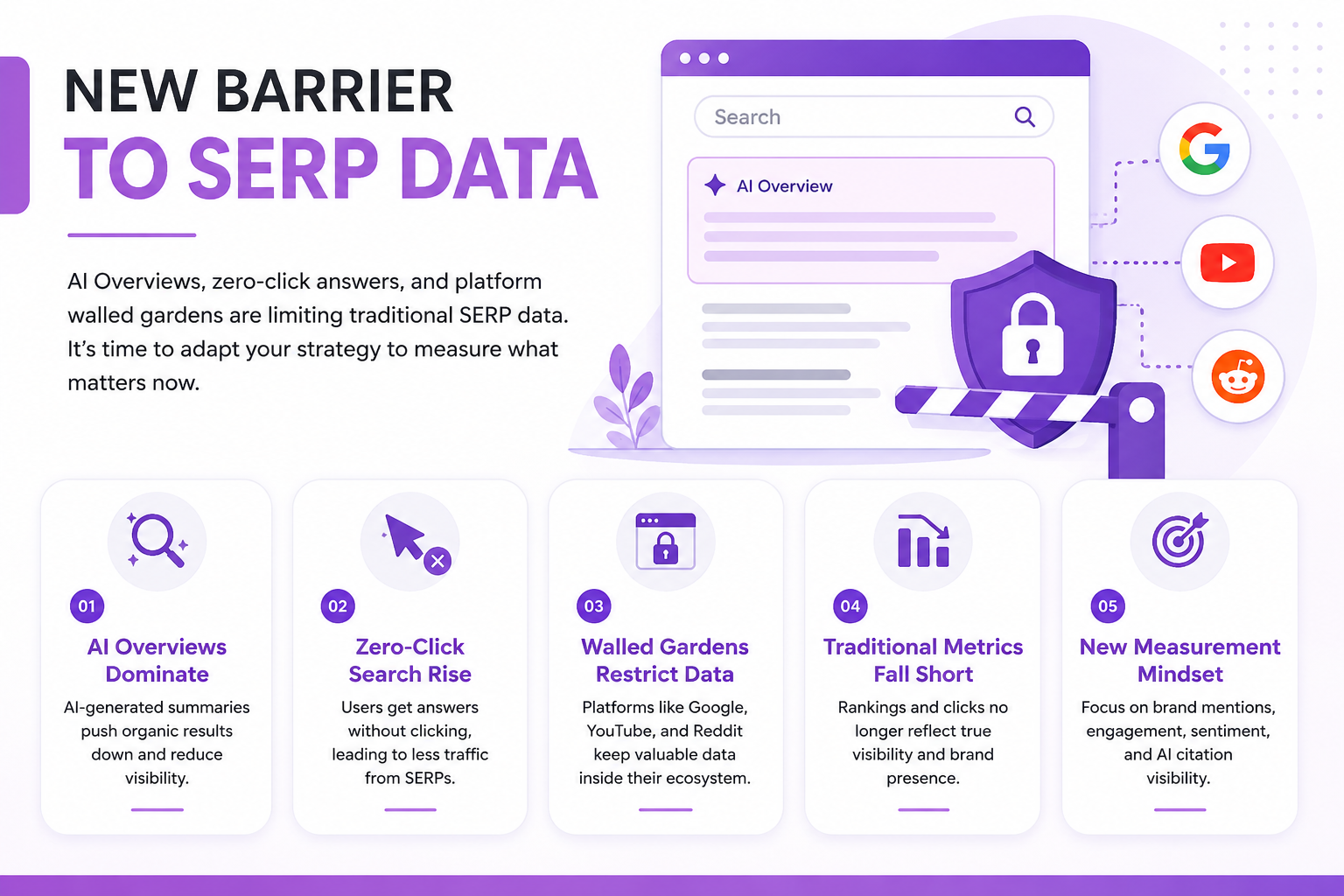
How the New Barrier to SERP Data Is Changing SEO
Search engine optimization has always depended on accurate SERP (Search Engine Results Page) data, and I’ve seen how marketers rely on keyword rankings, click-through rates (CTR), search volume, and competitor analysis to measure success.
Today, Google’s search landscape is changing with AI Overviews, AI Mode, personalized results, and stronger anti-scraping measures, making traditional SERP data less reliable. This creates a new barrier to SERP data, making traditional SERP tracking and analysis less reliable.
I believe ranking #1 is no longer enough because AI-generated answers often appear before organic listings, reducing visibility and clicks. In place of focusing only on rankings, I suggested building brand authority, creating trustworthy content, and improving AI visibility.
In this blog, I’ll explain what SERP data is, why access is becoming more limited, how these changes impact SEO, and the methods and metrics I use to succeed in the AI-first search era.
What Is SERP Data?
SERP: The complete set of information and elements displayed on a Search Engine Results Page (SERP) in answer to a user query. It includes organic rankings, paid ads, featured snippets, AI-generated results, local packs, images, videos, People Also Ask boxes, and other search features.
SEO experts analyze this data to understand how search engines display content and how users interact with search results. However, the new barrier to SERP data makes this harder due to AI features and stricter access limits.
Key Components of SERP Data
- Organic Results: Non-paid webpages that appear in search results because search engines consider them the most relevant and authoritative for a user’s query.
- Paid Ads: Advertisements displayed on the SERP through paid search campaigns, where businesses bid on keywords to gain prominent visibility.
- SERP Features: Expanded search elements beyond standard listings, including AI Overviews, featured snippets, People Also Ask sections, local map packs, image carousels, and other rich results that provide quick answers or additional information
Uses of SERP Data
- SEO Performance Tracking: SEO platforms use SERP data to track keyword rankings, measure visibility, and identify changes in competitor performance over time.
- Search Intent Analysis: Reviewing SERP elements helps marketers understand user expectations, preferred content formats, and the type of information search engines prioritize.
- Market & Competitor Research: Businesses analyze SERP changes to discover new competitors, monitor industry trends, and identify potential search algorithm updates.
What Is the New Barrier to SERP Data?
Google is transforming search into an AI-driven experience. In place of displaying the same static results for every user, search pages now vary based on context and AI-generated summaries.
At the same time, Google has powerful restrictions on automated scraping, creating a new barrier to SERP and limiting access to search data.
These changes create a significant barrier to traditional SERP tracking.
- AI Overviews: AI Overviews generate summaries that answer user questions before organic listings appear. Users often receive the information they need without visiting any website, reducing organic visibility.
- AI Mode: AI Mode provides conversational responses rather than a list of links. Instead of ranking webpages, AI synthesizes information from multiple sources, making traditional position tracking less meaningful.
- Personalized Search Results: Search results increasingly vary based on location, search history, device, language, and user behavior. Two people searching the same keyword may see different results.
- Dynamic SERPs: Modern SERPs continuously change depending on the query. AI summaries, videos, shopping results, and news can appear or disappear
Why Google Is Limiting Traditional SERP Visibility
At the same time, Google has strengthened anti-scraping measures to prevent automated tools from collecting large amounts of search data.
These changes create a new barrier to SERP, making it more difficult for SEO platforms to track keyword rankings, featured snippets, and search result fluctuations with the same accuracy as before.
As a result, marketers can no longer rely solely on traditional SERP metrics to measure performance. Instead, they must adopt broader SEO strategies that focus on content quality, user intent, brand authority, and visibility across multiple search experiences.
Traditional SEO Metrics That Matter Less Today
Many traditional SEO metrics, including keyword rankings, click-through rates, and average positions, are becoming less reliable as AI-driven search evolves and creates a new barrier to SERP.
| Traditional Metric | Why It Matters Less |
| Keywords Rankings | AI-generated answers often appear in organic listings. |
| Organic CTR | AI summaries reduce website clicks |
| Feature Snippets | AI overviews frequently replace traditional snippets |
| Search Volume | Doesn’t capture conversational AI search correctly |
| Impressions | Visibility may increase as website traffic declines. |
These metrics still provide useful information, but they should no longer be the primary indicators of SEO success.
Common Mistakes to Avoid
Many businesses still rely on outdated SEO practices, overlooking AI-driven search changes, evolving user behavior, and the new barrier to SERP that influences online visibility.
- Chasing keyword rankings as your only KPI.
- Ignoring AI Overviews and AI Mode.
- Publishing generic AI-generated content without adding original value.
- Focusing only on keywords instead of solving user problems.
Conclusion
The new barrier to SERP data are transforming how SEO success is measured. While keyword rankings, click-through rates, and traditional tracking tools still offer useful insights.
They no longer provide the complete picture in an AI-first search environment. As Google continues expanding AI Overviews, AI Mode, personalized search, and dynamic results,
I believe SEO professionals must focus on building trustworthy content, strong brand authority, and genuine expertise rather than chasing rankings alone.
Success now depends on creating content that answers user intent, earns citations, and overcomes the new barrier to SERP while remaining visible across multiple search experiences.
By adapting to these changes and tracking meaningful business outcomes instead of outdated metrics, you can build a stronger, more resilient SEO strategy for the future of search.
Frequently Asked Question
Google search console data changes?
Google Search Console data changes can reveal traffic trends, indexing issues, keyword performance shifts, and technical problems, helping improve your website’s search visibility.
Refresh the outdated content tool.
A refresh-outdated content tool helps update old webpages, improve accuracy, maintain relevance, and boost search performance with current information.
Https Search Google com Search Console remove outdated content
Use Google Search Console’s Remove Outdated Content feature to request removal of outdated cached pages and obsolete search snippets from Google, helping overcome the new barrier to SERP
Google serp data collection changes
Google SERP data collection is changing as search results become more dynamic, personalized, and AI-driven. Businesses must track rankings, features, and visibility more accurately.