



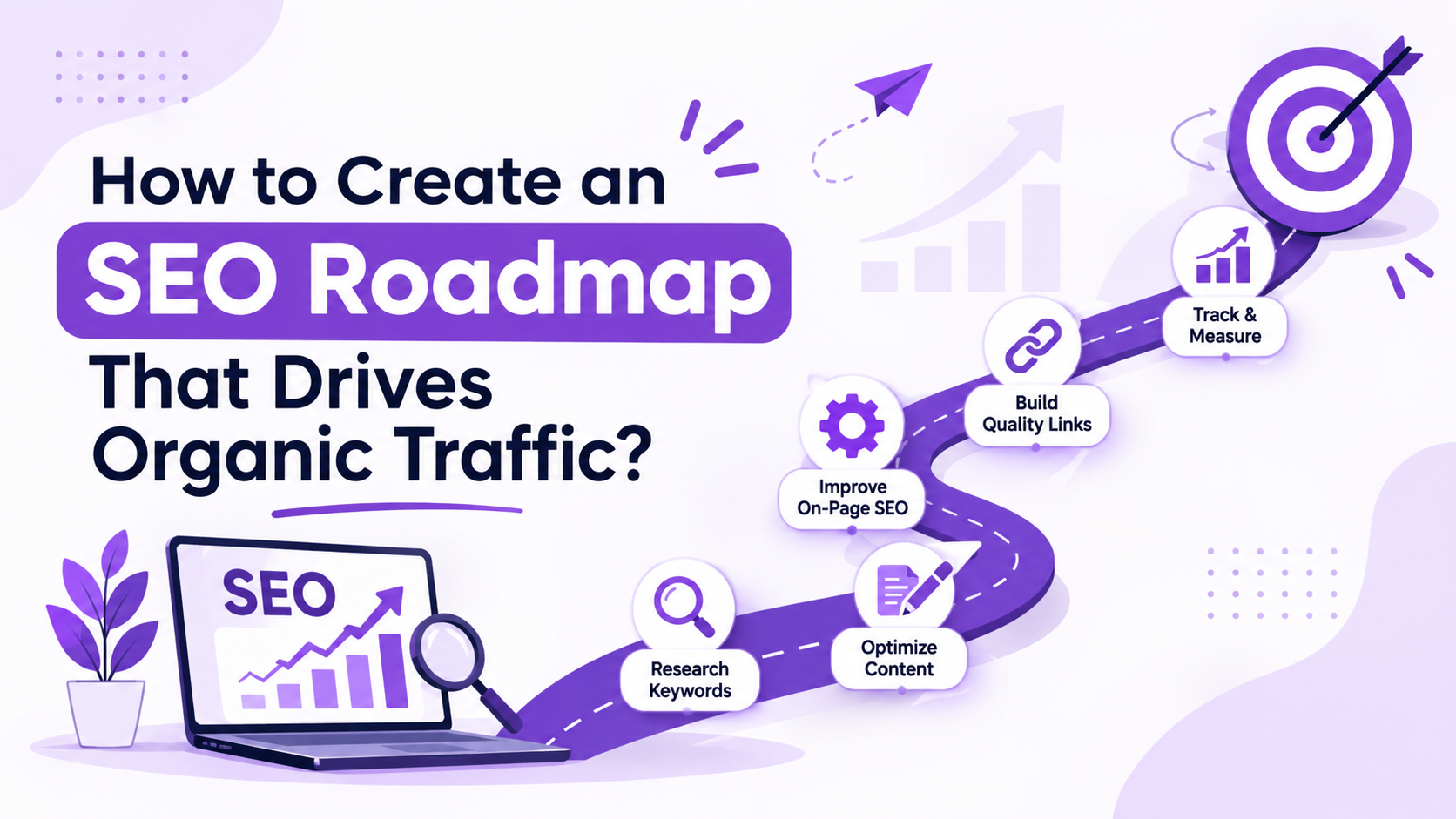
How to Build an Effective SEO Roadmap to Improve Website Rankings
What if your website has valuable content, the right keywords, and quality backlinks but still struggles to rank on Google? Getting noticed in search results takes more than simply following SEO practices. Without a clear direction, even well-planned efforts may fail to deliver the results your business expects. So, what is missing?
The answer often lies in having a well-defined SEO roadmap. I believe that achieving better search rankings starts with understanding where your website stands and what needs to be improved.
A clear strategy helps businesses move in the right direction in place of making random SEO changes. In this blog we will know why having a roadmap matters and how it can support your website’s long-term growth.
What Is an SEO Roadmap?
An SEO roadmap is a structured long-term strategic plan that outlines specific search engine optimization tasks, milestones, timelines, and responsibilities to improve a website’s organic visibility and a business’s revenue.
It provides a clear direction for improving a website’s search engine performance through planned SEO activities. An SEO roadmap helps businesses identify areas that need improvement, set realistic goals, and prioritize tasks based on their importance.
It typically includes keyword research content optimization, technical SEO, link building and performance effectiveness, monitoring progress, and making informed decisions. It also helps maintain regularity and achieve sustainable organic growth over time.
Why Does Your Website Need an SEO Roadmap?
A website needs a clear SEO method to complete effectively in search engine results. Without proper planning, businesses may spend time on activities that do not deliver meaningful results. Here are some important reasons to create one.
- Improve Search Engine Rankings: A structured approach helps identify ranking issues and optimize website pages for relevant search queries. It supports better visibility when users search for products, services, or information related to your business.
- Increase Organic Website Traffic: Targeting relevant keywords and publishing useful content can attract visitors who are genuinely interested in your offerings. This helps businesses grow website traffic without depending entirely on paid advertising.
- Identify SEO Opportunities: Regular website analysis helps discover keyword gaps, content improvement opportunities, technical problems, and areas where competitors are performing better.
- Measure SEO Performance: Setting clear objectives makes it easier to monitor keyword rankings, organic traffic, conversions, and other important performance indicators.
How to Build an Effective SEO Roadmap
Creating a successful SEO strategy requires proper research, planning, and consistent execution. The following steps can help you develop a practical plan for improving your website’s search performance.
1. Conduct a Complete SEO Audit
Start by understanding your website’s current SEO performance. A complete audit helps identify problems that may affect search visibility and user experience.
- Analyze Website Performance: Review organic traffic, page performance, keyword rankings, and user engagement to understand how your website is performing.
- Identify Technical SEO Issues: Check for broken links, crawl errors, indexing problems, duplicate pages, and slow-loading pages.
- Review Existing Content: Identify outdated information, missing keywords, duplicate content, and pages that need improvement.
An SEO audit provides a strong foundation for your SEO roadmap because it helps you understand which issues need immediate attention.
2. Set Clear SEO Goals and Objectives
After completing the audit, define what you want to achieve through SEO. Your goals should support your overall business objectives and be realistic enough to measure.
For example, you may want to increase organic traffic, improve rankings for important keywords, generate more qualified leads, or increase online sales.
Set measurable performance targets using the SMART approach: specific, measurable, achievable, relevant, and time-bound. Instead of simply aiming to increase traffic, set a target such as improving organic traffic by 15% within six months.
Clear objectives help your team understand what success looks like and make it easier to evaluate progress.
3. Perform Keyword Research
Keyword research helps you understand what your target audience searches for on Google and other search engines. It also helps you identify the topics and search terms that should be included in your content strategy.
Consider these activities:
- Identify Relevant Keywords: Find search terms related to your products, services, industry, and audience requirements.
- Understand Search Intent: Determine whether users are looking for information, comparing products, or preparing to make a purchase.
- Find Long-Tail Keyword Opportunities: Target specific search phrases that often have lower competition and attract more focused visitors.
Tools such as Google Keyword Planner, Ahrefs, and SEMrush can help you discover keyword ideas, search volume, and competition levels.
4. Analyze Your Competitors
Competitor analysis helps you understand what other websites in your industry are doing to achieve better search rankings. It also reveals opportunities to improve your own SEO strategy.
First, identify websites that rank for the keywords you want to target. Then review their content quality, website structure, backlink profiles, and keyword strategies.
Pay special attention to keyword gaps. These are relevant search terms that your competitors target but your website may not cover. You can use these opportunities to create useful content and reach a wider audience.
However, avoid copying competitor content. Focus on providing more helpful information, better explanations, and a stronger user experience.
5. Create an On-Page SEO Strategy
On-page SEO involves optimizing individual website pages to help search engines understand their content and make them more useful for visitors.
Important optimization activities include:
- Optimize Title Tags and Meta Descriptions: Write unique titles and descriptions that clearly explain each page’s topic and encourage users to click.
- Improve Heading Structure: Use appropriate H1, H2, and H3 headings to organize content and make it easier to read.
- Optimize Internal Linking and URLs: Connect related website pages through relevant internal links and use short, descriptive URLs.
You should also include relevant keywords naturally, optimize image alt text, and make sure your content answers users’ questions.
6. Develop an SEO Content Strategy
Content plays an important role in attracting visitors and building website authority. A strong content strategy ensures that your website consistently provides useful and relevant information.
Start by identifying topics that match your audience’s interests and search intent. Create informative blogs, service pages, guides, and other content formats that address their needs.
You should also update existing website content to maintain accuracy, improve readability, and include relevant information.
Another useful approach is building topic clusters. This means creating a main pillar page around a broad topic and connecting it with supporting articles covering related subtopics. It helps organize website content and makes it easier for visitors to explore relevant information.
7. Improve Technical SEO
Technical SEO focuses on improving the website’s structure and performance so search engines can crawl, understand, and index its pages effectively.
Some important technical improvements include:
- Improve Website Loading Speed: Optimize images, reduce unnecessary scripts, and improve server performance to create faster-loading pages.
- Optimize Mobile Responsiveness: Ensure your website works properly across smartphones, tablets, and desktop devices.
- Fix Broken Links and Crawl Errors: Identify broken URLs, redirect issues, and pages that search engines cannot access properly.
- Optimize XML Sitemaps: Create and maintain an updated sitemap to help search engines discover important website pages.
You should also check HTTPS security, canonical tags, and structured data where relevant.
8. Build a Strong Backlink Strategy
Backlinks are links from other websites that point to your website. Relevant and trustworthy backlinks can help search engines understand your website’s authority and credibility.
Focus on earning quality links rather than collecting a large number of low-quality backlinks.
You can build backlinks through guest posting, useful industry resources, original research, digital PR, and creating content that other websites naturally want to reference.
Regularly monitor your backlink profile to identify potentially harmful or unnatural links. Remember that quality, relevance, and genuine value are more important than backlink quantity.
9. Track SEO Performance and Results
SEO requires continuous monitoring because rankings, competition, and search trends can change over time.
Use tools such as Google Search Console and Google Analytics 4 to evaluate your website’s performance.
Track important metrics, including:
- Keyword rankings to understand changes in search visibility.
- Organic traffic to measure visits from unpaid search results.
- Conversions to evaluate leads, purchases, and other business actions.
- Click-through rates to understand how frequently users click your search listings.
Review these metrics regularly and identify which activities are producing positive results. Use the findings to improve your strategy and make informed decisions.
How to Prioritize SEO Tasks in Your Roadmap
Not every SEO activity requires immediate attention. Some improvements can have a greater impact on website performance than others. Therefore, businesses should prioritize tasks based on their potential results, required effort, and available resources.
Start with high-impact issues, such as indexing problems, broken pages, and major website performance issues. Next, focus on keyword optimization, important landing pages, and content improvements.
You can also use an impact-versus-effort approach to organize tasks. Complete activities that offer significant benefits with relatively little effort first. Assign responsibilities to team members and set realistic deadlines for each activity.
This approach keeps your SEO roadmap organized and helps your team focus on meaningful improvements.
SEO Roadmap Timeline: A Month-by-Month Plan
SEO improvements take time, so dividing activities into monthly stages can make implementation easier. Here is a simple four-month plan businesses can follow.
Month 1: SEO Audit and Planning
Conduct a complete website audit, identify technical issues, review existing content, and analyze current SEO performance. Define business objectives and establish measurable targets.
Month 2: Keyword Research and On-Page SEO
Perform keyword research, understand search intent, analyze competitors, and identify keyword gaps. Start optimizing title tags, meta descriptions, headings, URLs, and internal links.
Month 3: Content Creation and Technical SEO
Publish relevant, high-quality content and update existing website pages. Build topic clusters, improve website speed, fix technical issues, and check mobile responsiveness.
Month 4: Link Building and Performance Tracking
Focus on earning relevant backlinks through outreach and quality content. Review keyword rankings, organic traffic, and conversions. Identify successful activities and areas that need further improvement.
This timeline provides a starting point. Actual SEO implementation may take longer depending on website size, competition, and available resources.
Common SEO Roadmap Mistakes to Avoid
Even with proper planning, businesses can make mistakes that affect their SEO results. Understanding these challenges can help you avoid unnecessary delays.
- Setting Unrealistic SEO Goals: Expecting immediate ranking improvements can lead to poor decisions. Set achievable targets and allow enough time for results.
- Targeting Irrelevant Keywords: Choosing keywords only because they have high search volume may attract visitors who are not interested in your offerings.
- Ignoring Technical SEO: Poor website speed, indexing issues, and broken links can negatively affect search performance.
- Publishing Content Without a Strategy: Creating content without understanding audience needs and search intent may result in low engagement.
- Not Tracking SEO Performance: Failing to monitor results makes it difficult to identify problems and improve your approach.
Best Tools for Creating an SEO Roadmap
The right SEO tools make research analysis and performance handling
The right SEO tools make research, analysis, and performance monitoring easier. Here are five useful tools to consider:
- Google Search Console: Helps monitor search performance, indexing issues, clicks, impressions, and keyword visibility.
- Google Analytics 4: Provides insights into website traffic, visitor behavior, engagement, and conversions.
- Google Keyword Planner: Helps discover keyword ideas and understand estimated search demand.
- Ahrefs: Supports backlink analysis, keyword research, competitor analysis, and website audits.
- SEMrush: Offers tools for keyword research, competitor tracking, site audits, and content optimization.
You do not need to use every tool. Choose the ones that match your website’s requirements, budget, and SEO objectives.
Conclusion
Achieving better website ranking than basic optimization, businesses need a clear direction, consistent efforts, and the right approach to improve their online presence.
From identifying website issues and researching relevant keywords to creating valuable content and earning quality backlinks, every activity plays an important role in SEO success.
Regular performance monitoring and timely updates are necessary to maintain progress. By focusing on user needs, following search engine best practices, and improving website performance, businesses can attract relevant organic traffic, reach potential customers, and build a stronger online presence over time.
Frequently Asked Question
How do I learn SEO as a beginner?
Beginners can learn SEO through online courses, blogs, and practical website experience. Start with keyword research, on-page SEO, technical SEO, and link building.
Can I learn SEO in 10 days?
Yes you can learn SEO basics in 10 days with consistent practice but mastering SEO requires continuous learning hands on experience and regular upadtes.
What is the proccess of on-page SEO?
On-page SEP involves optimizing tittle tag, meta descriptions,headings, URLs, Keywords, images, internal links,content quality and page speed to improve search rankings.