


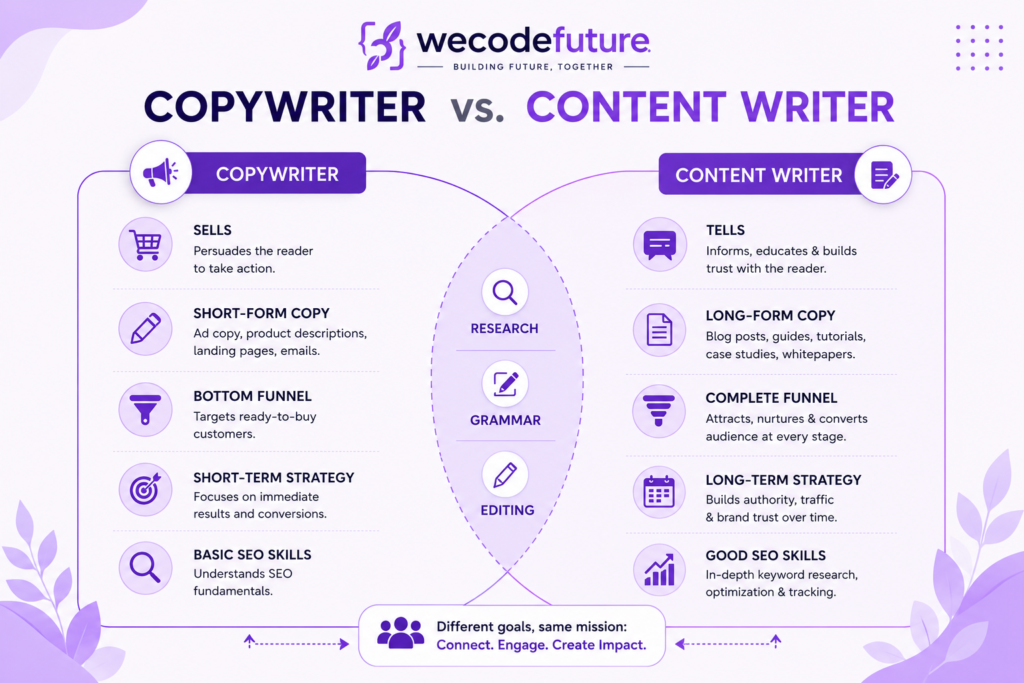
What’s the Difference Between Content Writing vs. Copywriting?
Many people use content writing vs. copywriting in the same way, but they are not exactly the same. Although both involve writing for businesses and audiences, their main aims are different. The simplest way to understand the difference is this: content writing informs and educates, but copywriting encourages people to take action. A blog post may help someone understand a topic, but a landing page may encourage them to sign up for a service or buy a product.
When I compare the two, I see content writing as a way to attract and educate an audience, but copywriting focuses on turning interest into action. Both are important in digital marketing. In this blog, learn their differences, uses, and how businesses can use both effectively.
What Is Content Writing?
Content writing is the process of making useful, informative, and valuable written material for a clear audience. Its main purpose is mainly to educate readers, answer their questions, and solve problems, and it gives information they can use.
Common Types of Content Writing
- Blog Articles: Educational and informative posts that answer readers’ questions, provide useful information, and improve online visibility.
- Website Content: Written copy for pages such as homepages, About Us sections, service pages, and product descriptions.
- Social Media Content: Short, engaging captions and posts created for platforms such as Instagram, LinkedIn, Facebook, and X.
- Email Newsletters: Informative messages sent to subscribers to share company news, valuable content, product updates, or special offers.
Key Skills Needed
- Research Ability: Collecting correct facts, dependable information, and relevant data from credible sources.
- Simple Writing: Presenting ideas in clear, simple language that is easy for readers to understand.
- SEO Understanding: Applying important keywords and improvement methods to improve visibility in search engines.
- Editing Ability: Checking content for grammar, spelling, structure, and clarity while making it direct and well-polished
How Content Writing Helps Businesses
For example, a company selling accounting software could publish a guide about handling small-business finances. Someone searching for financial advice may discover the guide, learn from it, and in the end become interested in the company’s software.
What Is Copywriting?
Copywriting is writing created to convince an audience to take a specific action. That action could be purchasing a product, requesting a quote, signing up for an email list, downloading a resource, getting expert guidance, or clicking an advertisement.
Not like educational content, content writing vs. copywriting can have a stronger commercial purpose. It focuses on benefits, customer problems, desires, objections, and the next step the reader should take.
Common Examples
- Website copy and landing page headlines
- Promotional and marketing emails
- Social media posts and advertisements
- Digital banners, billboards, and paper brochures
- Television and video advertising scripts
Key Goals and Purpose
- Encourage action from readers and possible customers
- Increase brand awareness and powerful recognition
- Address customer needs by highlighting clear benefits
- Boost sales and attract qualified business leads
How Copywriting Helps Businesses
Copywriting can directly support revenue-generating activities. A strong headline can make someone stop scrolling, while a well-written product description can answer objections and make a purchase feel easier.
For instance, an online clothing store may use content to explain current fashion trends but use copy on its product pages to highlight the fit, material, benefits, and reasons to buy a particular item.
Content Writing vs. Copywriting: What’s the Difference?
The biggest difference comes down to intent. Content writing generally focuses on informing, educating, and building trust. Copywriting generally focuses on persuading and encouraging action.
| Factor | Content Writing | Copywriting |
| Main goal | Inform and educate. | Encourage and convert. |
| Primary purpose | Build trust and provide value. | Drive action. |
| Writing style | Informative | Persuade |
| Main focus | Information and audience needs | Customers’ needs and actions |
| Common formats | Blogs, articles, guides | Landing pages and sales pages |
| CTA | Often indirect | Usually direct |
Who Uses Copywriting?
Copywriting is used by businesses, brands, and professionals that want to attract attention and encourage people to take action. It plays an important role in marketing, advertising, and sales.
- Businesses: Use copy to promote products, services, and special offers.
- Marketing Agencies: Create advertising and promotional content for their clients.
- E-commerce Brands: Use product descriptions, sales pages, and ads to increase purchases.
- Startups: Use copywriting to introduce their brand and attract new customers.
- Freelancers and Professionals: Use persuasive content to promote their services and generate leads.
- Nonprofit Organizations: Use copy to raise awareness, encourage donations, and attract supporters
How Content Writing vs. Copywriting Work Together
These two forms of writing do not have to compete with each other. In fact, they often work best together.
Content can attract people at the beginning of the customer journey. Someone may discover a company through a blog post, guide, or educational resource.
For example:
Content attracts: A person discovers an article through Google.
Content educates: The article explains their problem and possible solutions.
Trust develops: The reader sees that the business understands the subject.
Copy influences: A service page explains the company’s benefits and addresses customer concerns.
Action happens: A clear CTA encourages the visitor to book, buy, subscribe, or contact the business.
This combination creates a stronger customer journey than relying on only one type of writing.
Conclusion
Content writing vs. copywriting have different purposes, but both can play an important role in a successful marketing strategy. Content informs, educates, answers questions, and builds trust, while copy drives readers and supports them to take action.
The best choice depends on your goal. If you want to attract an audience and provide valuable information, a content writer may be the right choice. If you want to generate sales, leads, or conversions, a copywriter may be more suitable.
However, businesses do not always have to choose between the two. When educational content and powerful copy work together, they can attract visitors, build relationships, address customer needs, and guide people toward meaningful actions.
Frequently Asked Question
Content writing vs.copywriting examples
Content writing examples include blogs, guides, and newsletters, while copywriting examples include advertisements, sales pages, product descriptions, emails, and calls-to-action.
Freelance content writing vs. copywriting examples
Freelance content writers create blogs, articles, and guides, while freelance copywriters produce ads, sales pages, email campaigns, product descriptions, and promotional content.
Copywriting jobs work from home for students without investment
Students can find copywriting jobs from home without upfront investment, creating ads, website copy, social media content, product descriptions, and emails for clients.