



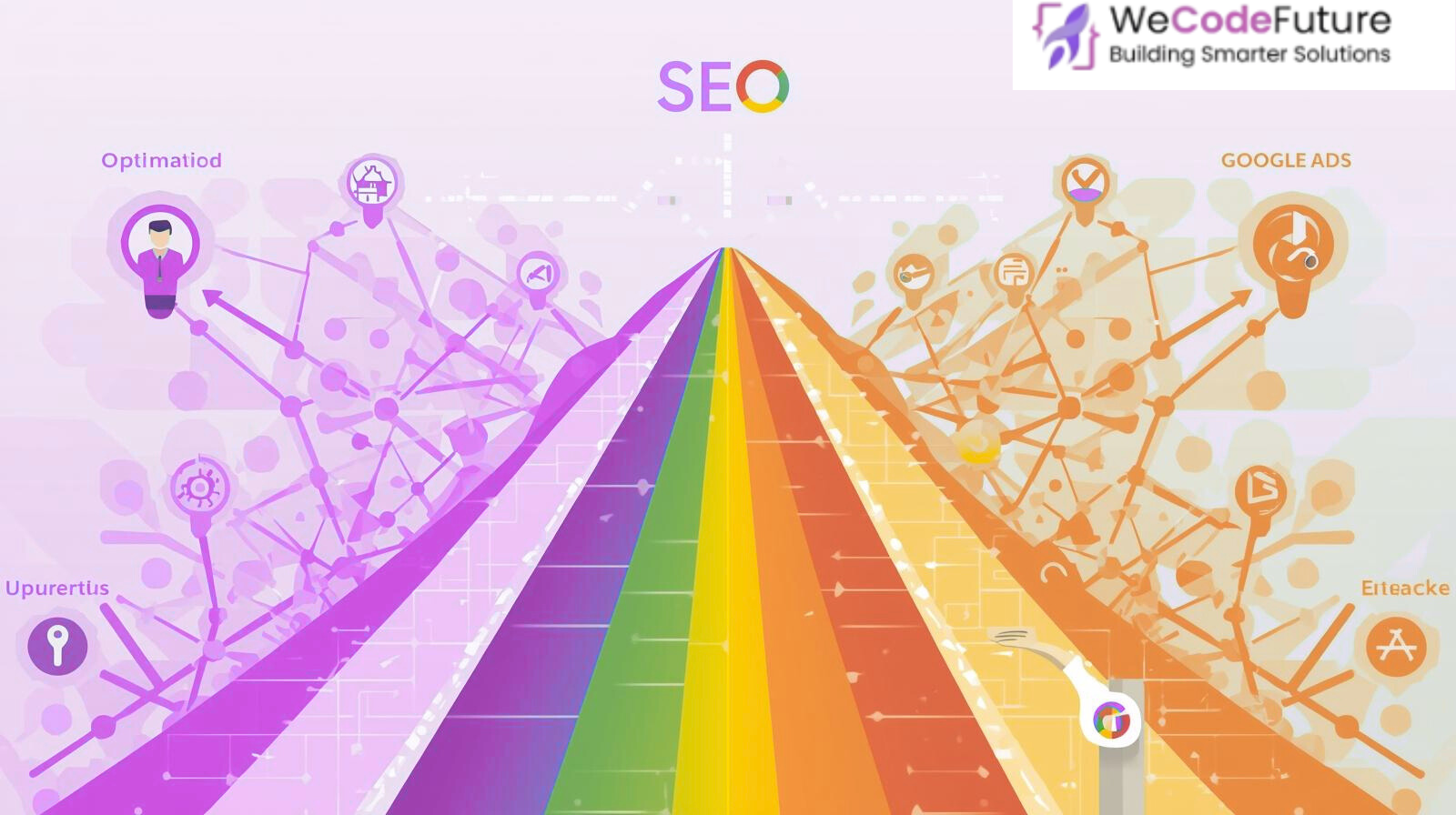
SEO vs Google Ads: Which One Is Better for Small Businesses?
Small businesses today function in a very high-stakes digital setting. Customers no longer trust only sales floors, mentions, or newspaper ads. Otherwise, they turn to Google to search for products, services, reviews, and answers to their problems. If your business does not appear where people are searching, you are likely losing expected clients every day.
This is where digital marketing explained in a simple and practical way becomes vital. Within all digital methods, two stand out as the most helpful for reach and audience generation: Search Engine Optimization SEO vs Google Ads. Both goal to put your business in front of customers on search engines, but they do it in very different ways.
For small business owners with limited money and resources, choosing between SEO vs Google Ads can feel confusing and overstress.This guide explains both methods in depth, compares their powerful and weaknesses, and helps you decide which option—or mixing—is best for your business.
A Guide to Digital Marketing for Small Businesses
Before mixing SEO vs Google Ads, it is important to realize the larger picture. When digital marketing explained clearly, it refers to boosting your business using online methods such as search engines, websites, social media, email promotions, and paid advertising.
For small businesses, digital marketing offers many major benefits.
- Connect with the customers exactly when they are searching
- Campaigns are measurable and logged
- Costs are flexible and high growth
- Results can grow over time
SEO vs Google Ads are both part of search engine marketing, which focuses on getting high-intent people who are actively looking for something exact.
Introduction of SEO (Search Engine Optimization
SEO is the practice of making your website simple to find in natural search results on Google and other search platforms. By users’ search for terms relevant to your business. SEO helps to make your website rank high.
When digital marketing explained through SEO, it can be thought of as making strong online support that attracts traffic naturally over time.
How SEO Works
SEO is typically divided into three main parts:
On-Page SEO
This target is on the content and structure of your website:
- Keyword improved
- High-level, informative content
- Perfect headings and formatting
- Meta titles and descriptions
- Internal linking
Off-Page SEO
This refers to alerts from outside your website:
- Backlinks from powerful websites
- Brand mentions
- Reviews and online status
Technical SEO
This confirms your website functions properly:
- Fast loading speed
- Mobile-ready layout
- Secure website connection
- Clean site architecture
How SEO Helpful for Small Businesses
Long-Term Cost Savings
SEO does not require paying for every click. Once your website ranks well, it can develop traffic always without additional cost per guest. Over time, this makes SEO one of the safest marketing methods.
Builds Trust and Creates Credibility
Users tend to trust natural search results more than paid ads. Appearing on the first page of Google signals authority, accuracy, and relationship.
Sustainable Growth
SEO results build gradually but last longer. Quality content and backlinks continue to bring traffic months or even years after publication.
Improves User Experience
SEO supports better website design, faster loading pages, and helpful content, all of which improve customer happiness
For many business owners, digital marketing explained via SEO feels more natural and brand-targeted than purely branding
Struggles and Limitations of SEO
Despite its advantages, SEO is not perfect:
- Results develop over time (usually 3–6 months or longer)
- Requires consistent effort and content creation
- Competitive sectors are harder to rank in
- Search engine method updates can affect rankings
SEO is ideal for long-term growth but not for business that need immediate presence
What Do Google Ads Mean?
Google Ads is a paid advertising platform that allows businesses to place ads at the top of Google’s search results. You bid on keywords, and your ad shows when users search for those terms.
When digital marketing explained through Google Ads, it is mainly paying for instant exposure to possible customers.
How Google Ads Works
- You choose keywords aligned to your business
- Set a daily or every-month budget
- Pay only when someone clicks your ad (PPC)
- Ads stop showing when your fund are used up
Benefits of Google Ads for Small Businesses
Immediate Results
Google Ads can start driving traffic and leads within hours. This makes it ideal for businesses that need a quick presence.
Exact Targeting
You can target users based on:
- Location
- Device usage
- Time of day
- Hardware type
Budget Control
You decide exactly how much to spend. Methods can be paused, adjusted, or grown at any time.
Great for Promotions and Testing
Google Ads works well for:
- Latest product launches
- Limited-time offers
- Seasonal methods
- Testing new keywords
When digital marketing explained with speed and agility in mind, Google Ads becomes very attractive.
Problems and Limitations of Google Ads
- Traffic stops as soon as ads stop
- Costs increase in competitive industries
- Demands constant monitoring and improved
- Poorly managed ads can waste money faster
Google Ads is powerful, but it depends heavily on regular spending.
SEO vs Google Ads: How they Compare
Cost Comparison
- SEO: Lower long-term cost, higher time spending
- Google Ads: Higher ongoing cost, immediate promotion
Rate of Results
- SEO: Slow but regular growth
- Google Ads: Instant awareness
Duration
- SEO: Results last even if you pause efforts
- Google Ads: Results fade when spending stops
Trust and Confidence
- SEO: Higher user trust
- Google Ads: Clearly marked as promoted
When digital marketing explained from a method point of view, these differences help clarify which tool suits different business aims.
Which Is Better for Small Businesses?
SEO Is Better If:
- You want long-term increase
- You have a limited marketing budget
- You are focused on brand power
- You can invest time and effort
Google Ads Is Better If:
- You need quick leads or sales
- You are promoted time-sensitive offers
- You want full control over traffic volume
- You have a flexible marketing budget
The Best Strategy: Using SEO and Google Ads Together
The most successful small businesses do not really on just one method. In place of that, they are mixing SEO and Google Ads to maximize results.
Here’s how this works:
- Google Ads provides fast traffic and keyword data
- SEO uses that data to target high-impact natural keywords.
- Over time, nature traffic reduces addiction on paid ads
When digital marketing explained as a system made of a single tactic, this mixing of methods delivers better ROI.
Practical Example for a Small Business
Review a local service-based business:
- Months 1–3: Runs Google Ads to generate fast leads
- Months 4–6: SEO content start ranking
- Months 7–12: Natural traffic grows; decrease ad spend
This planning handles short-term results with long-term thinking.
Typical Mistakes Small Businesses Make
- Expecting last SEO results
- Spending on ads without change tracking
- Targeting the innocent keywords
- Ignoring website quality and content
Understanding digital marketing explained right helps avoid these mistakes and save money.
Selecting the Right Strategy for Your Business
Ask yourself:
- How much faster do I need results?
- What is my marketing budget for each?
- Am I focused on short-term sales or long-period growth?
Your answers will determine whether SEO, Google Ads, or both are right for you
SEO and Google Ads: What the Future Holds
Search engines continue to evolve. User experience, mobile improvement, and content quality are becoming more important. Paid ads are also becoming more fast-paced and data-focused.
Businesses that understand digital marketing explained in a complete way will be best positioned to adapt and grow.
Final Comparison: SEO vs Google Ads
There is no common winner.
- SEO is ideal for stable long-term growth
- Google Ads is ideal for fast, controlled results
The real advantage comes from using both planned
When digital marketing explained from a growth viewpoint, SEO builds your foundation while Google Ads quickens your reach.
Conclusion
For small businesses, reach is everything. SEO vs Google Ads are not opposing forces—they are complementary tools. Choosing the right balance allows you to grow regular growth costs and stay demanding in your market.
When digital marketing explained clearly, decision-making becomes more removed and more confident. Whether you start with SEO, Google Ads, or a combination of both, success comes from stability measurement and continuous improvement.