



What Are UGC Ads? Benefits, Types, Examples & How to Create
What makes people trust a brand enough to buy its products? Often, it’s not a polished advertisement but a real person sharing an honest experience. In today’s social media-driven world, consumers are looking for more than promotional messages. They want authentic reviews, relatable stories, and genuine recommendations they can trust.
This changing consumer behavior has made UGC Ads (user-generated content ads) an increasingly popular marketing approach. Instead of relying only on traditional advertising, brands are finding new ways to connect with audiences through real experiences and relatable content.
Personally, I believe people connect more with content that feels genuine than with advertisements that simply try to sell. But what makes UGC Ads different, and why are more businesses paying attention to them?
What Are UGC Ads?
UGC Ads are advertisements that use user-generated content (UGC) to promote a brand, product, or service. This content is usually created by customers, content creators, or individuals who share their experiences with a particular product or service.
Unlike conventional advertisements that often feature professional actors, studio settings, and carefully planned promotional messages, these advertisements generally use a more natural and relatable presentation
For example, imagine a skincare company promoting a new moisturizer. Instead of producing a traditional commercial with professional models, the company could feature a creator demonstrating how they apply the moisturizer, discussing its texture, and explaining their personal experience.
The video may look like an ordinary social media post, but the brand can use it as a paid advertisement to reach a specific audience.
How Do UGC Ads Work?
UGC ads are paid social media ads that look and feel like daily posts created by everyday people rather than professional advertisements made by brands.
Once the content is ready, the marketing team selects suitable material, edits it if necessary, and prepares it for advertising platforms.
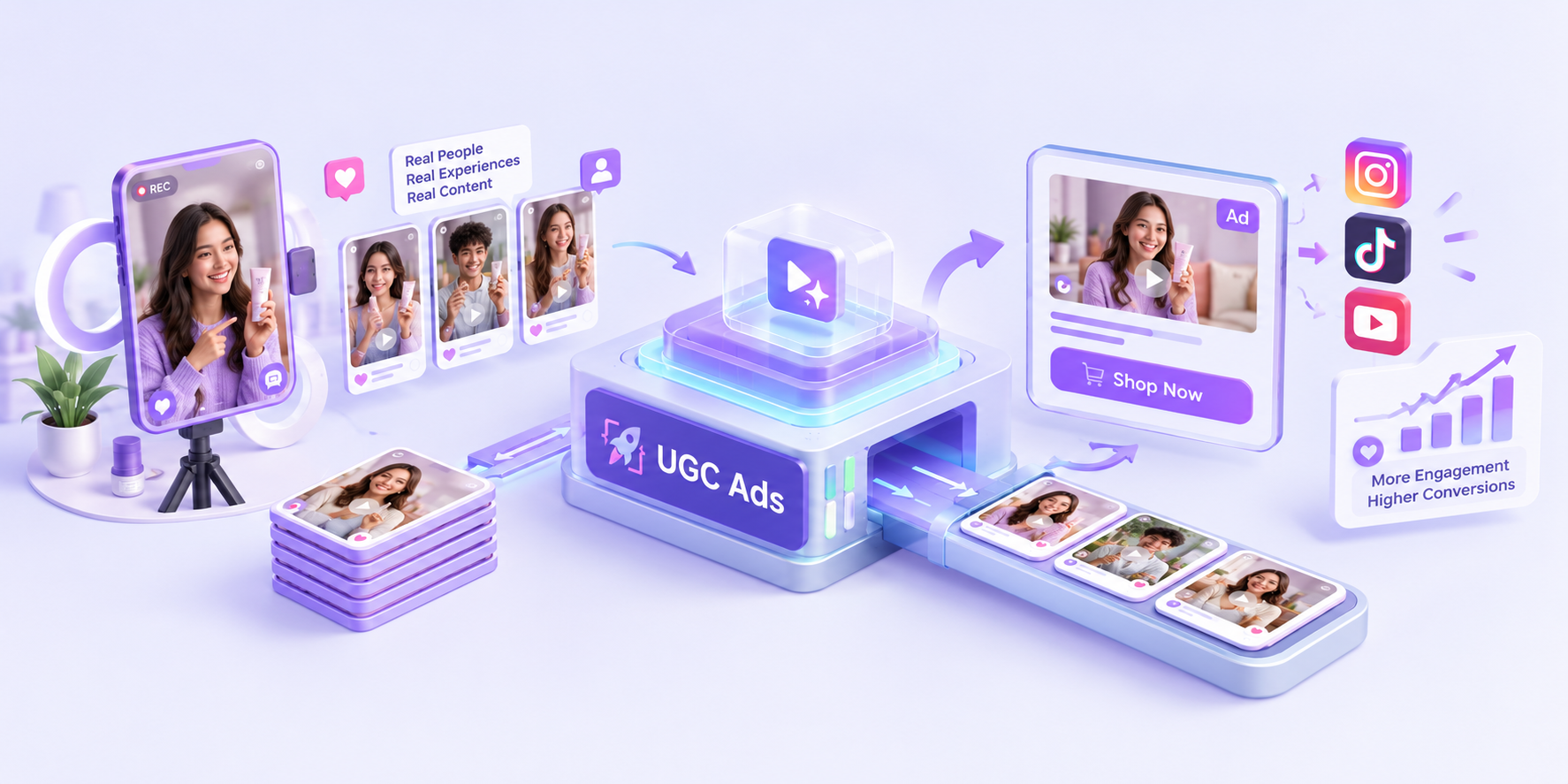
Here is how the process generally works:
- Content Creation: A customer or creator creates content featuring a product or service. This could be an honest review, product demonstration, tutorial, or personal recommendation.
- Content Collection: The brand identifies suitable content and contacts the creator to obtain permission for advertising use. If the content is being produced through a paid collaboration, the brand agrees on the deliverables and usage rights beforehand.
- Creative Editing: The selected content is edited to match the advertising objective. This may include adding captions, product information, background music, brand elements, and a clear call to action.
- Advertising Campaign Setup: The business uploads the finished creative to an advertising platform such as Facebook, Instagram, TikTok, or YouTube. It then selects the target audience, budget, placement, and campaign objective.
- Campaign Optimization: After launching the campaign, marketers monitor its performance. They analyze engagement, clicks, conversions, and advertising costs to identify which creative performs best.
How to Create UGC Ads
Creating UGC Ads involves more than recording a video and adding a product link. I need to understand my audience, choose the right content format, and communicate the product’s value in a way that feels natural and relatable. A well-planned UGC ad can capture attention, build trust, and encourage people to take action.
1. Define Your Advertising Goals
Before creating content, I need to decide what I want to achieve through the campaign. My goal will influence the content format, message, and call to action.
For example, I might want to:
- Increase brand awareness: Introduce my brand or product to a new audience.
- Generate website traffic: Encourage viewers to visit my website or product page.
- Increase sales: Highlight product benefits and motivate potential customers to make a purchase.
- Generate leads: Encourage people to sign up, request a quote, or submit an enquiry.
- Build customer trust: Share genuine experiences, reviews, and product demonstrations.
Setting a clear goal helps me create focused content and measure whether the campaign is delivering the expected results.
2. Identify Your Target Audience
Next, I need to understand who I want to reach. Knowing my target audience helps me create content that matches their interests, preferences, and purchasing behavior.
I can consider factors such as:
- Age, location, and demographics
- Interests and lifestyle
- Common problems and challenges
- Shopping habits and buying preferences
- Social media platforms they frequently use
For example, if I am promoting a skincare product to young adults, I can create a short video showing how the product fits into a daily skincare routine. This makes the content more relevant to the people I want to reach.
3. Find the Right UGC Creators
The creator plays an important role in making the advertisement feel relatable. I don’t necessarily need someone with a large social media following. Instead, I should look for creators who can communicate naturally and present the product in a way that connects with my audience.
I can find suitable creators through:
- UGC creator platforms and marketplaces
- Social media communities
- Existing customers who enjoy my products
- Influencer and creator networks
- Freelance platforms
While selecting creators, I should review their communication style, video quality, presentation skills, and experience with similar products. I should also confirm content usage rights before using their videos in paid advertising.
4. Plan the Content and Write a Script
Once I have selected a creator, I need to decide what the video should communicate. A clear script helps maintain the message while allowing the creator to speak naturally.
A simple UGC ad script can follow this structure:
- Hook: Start with an interesting question, statement, or relatable problem.
- Problem: Explain the issue the target audience may be experiencing.
- Solution: Introduce the product or service as a possible solution.
- Demonstration: Show how the product works or how it can be used.
- Call to action: Encourage viewers to learn more, visit the website, or purchase the product.
For example, a skincare brand could begin with, “Struggling to find a moisturizer that doesn’t leave your skin feeling greasy?” The creator can then demonstrate the product, explain its features based on their genuine experience, and finish with a clear call to action.
I should avoid making the script sound overly promotional. The goal is to create a conversation that feels natural rather than a traditional sales pitch.
5. Record and Edit the Video
After finalising the script, the creator can start recording. I don’t need an expensive production setup to create engaging content. A smartphone, good lighting, clear audio, and a suitable background can be enough.
During recording, I should focus on:
- Showing the product clearly.
- Capturing real product usage or demonstrations.
- Using natural lighting and clear audio.
- Keeping the creator’s delivery conversational.
- Recording vertical videos for platforms such as Instagram Reels and TikTok.
During editing, I can add captions, remove unnecessary pauses, include relevant product shots, and use suitable background music. The opening few seconds should capture attention, while the rest of the video should communicate the product’s value clearly.
6. Launch the Ad on the Right Platform
Once the video is ready, I need to choose the platform where my target audience is most active. Different platforms offer different advertising opportunities, so I should select one based on my campaign goals.
Some popular options include:
- Instagram and Facebook: Suitable for product discovery, Reels, Stories, and conversion-focused campaigns.
- TikTok: Useful for short-form, entertaining, and creator-style video advertisements.
- YouTube: Suitable for product demonstrations, reviews, and longer video content.
- Pinterest: Helpful for lifestyle, fashion, beauty, home decor, and other visually driven products.
I can start with one or two platforms, test different creatives, and identify where the ads perform best.
How Can WeCodeFuture Help You With UGC Ads?
At WeCodeFuture, we help businesses create effective digital marketing strategies that support their growth. Our services include social media marketing, paid advertising, content creation, influencer marketing, and video editing to help you plan and promote engaging UGC ad campaigns.
We also provide SEO and content marketing services to improve your online visibility and strengthen your brand presence.
With our website design, web development, and eCommerce development solutions, we help create user-friendly platforms where potential customers can explore your products and make purchases.
By combining creative content with strategic digital marketing, we help businesses connect with their target audience, build brand awareness, and achieve their marketing goals. Whether you are a startup or an established business, WeCodeFuture can support your digital growth.
Conclusion
UGC Ads help businesses connect with customers through real experiences, product reviews, and simple demonstrations. They make it easier for people to understand a product and see how it works. However, creating successful ads takes more than just making videos.
Businesses need the right creators, clear messages, and good content that people can relate to. They should also test different video styles and check how well their ads perform. By understanding their audience and improving their campaigns, businesses can build trust, reach more people, and increase sales.
Frequently Asked Questions
What are AI-generated UGC Ads?
AI-generated UGC ads are digital video advertisements created using artificial intelligence to mimic the casual, natural, and authentic style of real user-generated content.
How to actually make money doing UGC?
You can make money doing UGC by creating videos for brands, charging content creation fees, offering packages, and securing repeat projects through quality work.
How do beginners make money on Instagram?
Beginners can earn money on Instagram through brand collaborations, sponsored posts, affiliate marketing, selling products, offering services, and creating UGC videos for businesses.